

A Race Against the Clock: The January Window Showdown Between London Rivals
The January transfer window of 2023 will be remembered as one of the most dramatic periods in recent Premier League history, largely thanks to the whirlwind pursuit of Ukrainian winger Mykhailo Mudryk. For weeks, Arsenal seemed destined to land the Shakhtar Donetsk star, with fans already dreaming of his blistering pace lighting up the Emirates. But in a twist that left the football world stunned, Chelsea swooped in at the eleventh hour and secured the signature of one of Europe’s most coveted young talents.
This wasn’t just a simple transfer negotiation—it was a high-stakes battle between two London giants, each desperate to prove their ambition. Arsenal, long admirers of Mudryk, had been in advanced talks since the summer. They believed they had a gentleman’s agreement with the player and his camp. Chelsea, under their new ownership led by Todd Boehly, saw an opportunity to make a statement and disrupt their rivals’ plans.
As former football agent and transfer expert Mark Johnson explained to Jeetwin, “What made this transfer unique wasn’t just the price tag—it was the speed at which Chelsea turned the tables. Arsenal thought they had a done deal, but Chelsea’s willingness to accelerate negotiations and meet Shakhtar’s valuation changed everything overnight.”
Why Mudryk Was the Most Wanted Man in Europe
Scouting Reports That Made Managers Drool
Mykhailo Mudryk wasn’t just another talented winger—he was the embodiment of modern attacking football. At 22 years old, playing for Shakhtar Donetsk in the Ukrainian Premier League, he had already drawn comparisons to Kylian Mbappé for his explosive acceleration and ability to cut in from the left flank. His performances in the Champions League group stage, particularly against RB Leipzig and Celtic, showcased a player who could dominate at the highest level.
- Pace and Dribbling: Mudryk possesses a rare combination of raw speed and close ball control, making him a nightmare for defenders in one-on-one situations.
- Finishing Ability: Despite being primarily a creator, his goal-scoring record improved significantly during the 2022-23 season, with 10 goals in 18 appearances across all competitions before the transfer.
- Versatility: While predominantly a left winger, he can operate on the right or as a secondary striker, giving managers tactical flexibility.
Arsenal’s technical director Edu had been tracking Mudryk for over 18 months, building relationships with Shakhtar’s hierarchy. The Gunners believed they had a structured deal worth around €70 million (£60 million) plus add-ons. Mikel Arteta, Arsenal’s manager, personally spoke to Mudryk multiple times, outlining his vision for how the Ukrainian would fit into the team’s attacking setup.

The Shakhtar Donetsk Dilemma
For Shakhtar Donetsk, selling Mudryk was never going to be straightforward. The club had already lost several key players due to the ongoing conflict in Ukraine, and Mudryk represented both their best asset and a symbol of Ukrainian football’s resilience. The club’s CEO, Sergei Palkin, is known as one of the toughest negotiators in European football. He understood that multiple clubs were circling and was determined to maximize the transfer fee.
“Shakhtar knew they had a gem,” says independent football analyst Sarah Thompson. “They weren’t going to sell for anything less than what they believed was his true value. When Arsenal tried to be more measured in their approach, Chelsea’s willingness to pay upfront moved the goalposts entirely.”
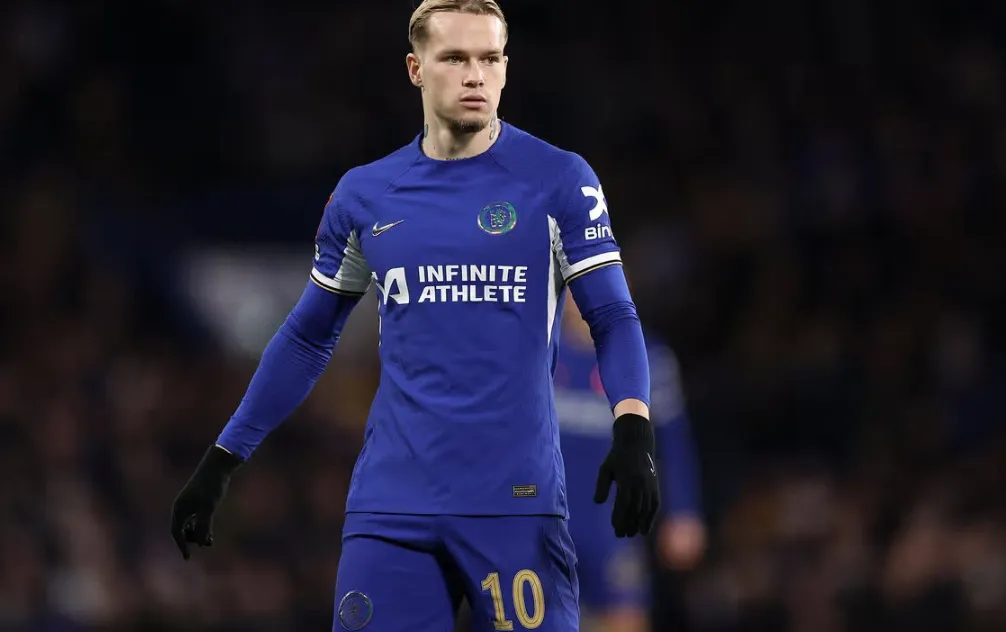
Chelsea’s Strategic Masterstroke: How the Blues Hijacked the Deal
The Boehly Era’s First Major Statement
When Todd Boehly and Clearlake Capital completed their takeover of Chelsea in May 2022, they promised a new era of aggressive recruitment. The Mudryk transfer became the perfect opportunity to demonstrate that ambition. Unlike Arsenal, who were working within a more structured budget after spending heavily on Gabriel Jesus and Oleksandr Zinchenko in the summer window, Chelsea had the financial firepower to move quickly.
The negotiations unfolded over a frantic 48-hour period in mid-January. While Arsenal believed they were finalizing terms, Chelsea’s co-sporting directors Laurence Stewart and Paul Winstanley flew to Turkey to meet directly with Shakhtar officials. The message was clear: Chelsea would pay €100 million (£88 million) upfront—a figure that Arsenal had been reluctant to match.
“Chelsea’s approach was different because they weren’t just buying a player; they were trying to send a signal,” explains transfer journalist James Cooper. “They wanted other clubs to know that Chelsea was back as a force in the transfer market. Offering Shakhtar a structure that guaranteed them immediate liquidity was something Arsenal couldn’t compete with.”
The Role of Agents and Backroom Politics
Behind the scenes, Mudryk’s agent, Oleksandr Kundenok, played a crucial role. Unlike many modern transfers where agents push for the highest bidder, Kundenok was reportedly concerned about the player’s development. Mudryk had grown up idolizing Arsenal’s attacking style under Arsène Wenger, and the dream of playing at the Emirates was real.
However, as the offers became public, pressure mounted from all sides. Arsenal’s final bid of €90 million (£77 million) was rejected, while Chelsea’s offer of €100 million plus bonuses forced Shakhtar to accept. For Mudryk, the decision was agonizing. Sources close to the player revealed that he was torn between his admiration for Arteta and the guaranteed playing time at Chelsea, where manager Graham Potter had promised him a central role in a new-look attack.
In a dramatic turn of events, Mudryk was spotted in a hotel in Istanbul on the morning of January 15, waiting to complete his medical. The next day, he was officially unveiled as a Chelsea player. For Arsenal fans, it was a bitter pill to swallow. For Chelsea supporters, it felt like a victory that signaled a new era.
The Fallout: How Both Clubs Have Fared Since
Mudryk’s Slow Adaptation at Chelsea
Fast forward to the present, and the Mudryk transfer has been a mixed bag. While the Ukrainian showed flashes of brilliance in his first few months—scoring on his debut against Liverpool and providing breathtaking assists—he has struggled with consistency in a turbulent Chelsea side. Managerial changes, from Graham Potter to Frank Lampard and now Mauricio Pochettino, have disrupted any sense of stability.
- Injury Issues: Mudryk missed crucial weeks due to a knee problem, delaying his adaptation to English football’s physical demands.
- Tactical Struggles: Chelsea’s revolving door of coaches has meant constant changes in formation and style, leaving Mudryk without a consistent role.
- Confidence Dips: Like many young players moving for a massive fee, the weight of expectation has sometimes affected his decision-making on the pitch.
Despite these challenges, those at Chelsea remain optimistic. “Mudryk’s talent is undeniable,” says former Chelsea midfielder John Obi Mikel in an exclusive interview with Jeetwin. “The Premier League is brutal, but once he gets a full preseason under his belt and the team settles, we’ll see the player that scared defenders in the Champions League.”
Arsenal’s Alternative Path
For Arsenal, missing out on Mudryk forced them to pivot quickly. Instead of panicking, Arteta and Edu shifted their focus to other targets, eventually signing Leandro Trossard from Brighton for £27 million—a fraction of Mudryk’s fee. While Trossard lacked the headline-grabbing potential of Mudryk, his immediate impact was undeniable. The Belgian forward provided crucial assists and goals, helping Arsenal maintain their title challenge until the final weeks of the season.
“Signing Trossard was smart business,” Thompson notes. “Arsenal needed a player who could contribute immediately, not a project. Mudryk might have had higher potential, but Trossard understood the league and fit Arteta’s system perfectly. In many ways, Arsenal dodged a financial bullet.”
What This Transfer Teaches Us About Modern Football
The Financial Arms Race Intensifies
The Mudryk saga highlights a growing trend in football: the gap between clubs with near-unlimited resources and those with careful financial planning. Chelsea’s ability to outbid Arsenal without blinking was a direct result of the Boehly-Clearlake strategy of amortizing transfer fees over long contracts—Mudryk signed an eight-and-a-half-year deal, spreading the cost over multiple seasons.
This approach has drawn criticism from UEFA and financial regulators, who argue it circumvents Financial Fair Play rules. However, for clubs like Chelsea, it’s a calculated risk. If Mudryk fulfills his potential, the investment will be seen as visionary. If he doesn’t, the burden of a long-term contract could hamper future squad building.
The Human Side of Transfers
Beyond the tactics and money, the Mudryk transfer reminds us that football is ultimately about people. For a young man from the war-torn city of Krasnohrad, leaving his homeland and moving to London at such a pivotal time was never going to be simple. Mudryk has spoken openly about the emotional toll of the transfer saga, admitting that the constant speculation affected his focus.
“It’s easy to forget that these players are human beings,” says sports psychologist Dr. Emma Richards. “Mudryk went from being a hero in Ukraine to facing intense scrutiny in one of the world’s most demanding leagues. The pressure isn’t just about performing—it’s about adjusting to a new culture, a new language, and new expectations, all while dealing with the weight of a massive price tag.”
Conclusion
How Chelsea Beat Arsenal to signing Mykhailo Mudryk remains one of the most fascinating transfer stories of the modern era. It was a tale of ambition, desperation, and split-second decision-making that reshaped the landscape of English football. Arsenal fans may still rue what could have been, but the Gunners’ subsequent success without him proves that one signing rarely defines a club’s destiny. For Chelsea, the challenge now is to ensure that their bold gamble pays off—not just in highlight reels, but in tangible trophies and consistent performances.
As Mudryk continues to develop under Pochettino’s guidance, the real story is still being written. Will he become the generational talent that both London clubs once dreamed of? Or will he be remembered as a cautionary tale about the dangers of making decisions based on emotion and competition rather than long-term strategy? Only time will tell.
What do you think about this transfer saga? Was Chelsea right to spend €100 million, or should Arsenal have pushed harder? Share your thoughts in the comments below, and don’t forget to explore more of our in-depth football analysis on Jeetwin. If you enjoyed this article, pass it along to a fellow football fan who loves a good transfer story!
