
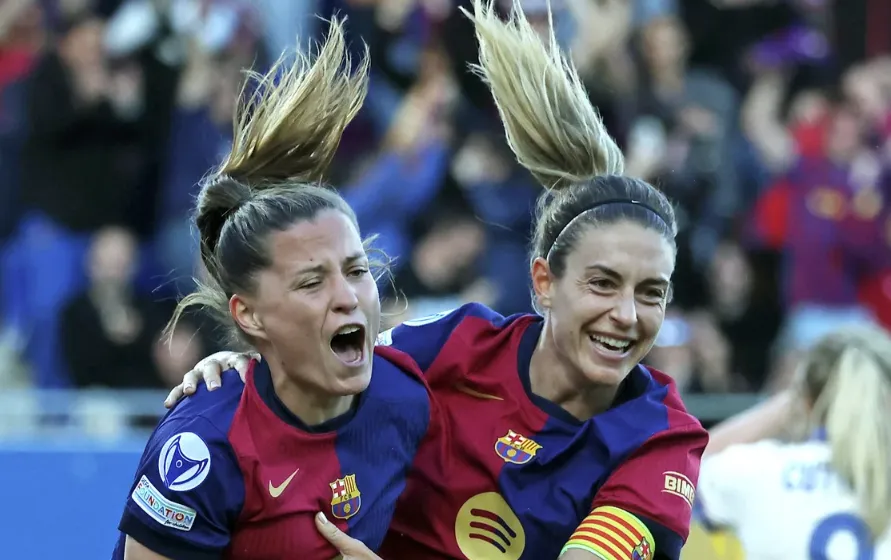
The Women’s Champions League has become one of the most exciting competitions in football, showcasing incredible talent and unforgettable moments. As we look at the current landscape of European women’s football, one burning question often comes up: which club has won the most Women’s Champions League titles? The answer reveals a fascinating story of dynasties, rising powers, and the beautiful evolution of the women’s game. Here at Jeetwin, we break down the history, the records, and the current champions who are rewriting the record books.
The All-Time Leader: Olympique Lyonnais Féminin
When discussing dominance in the Women’s Champions League, no conversation is complete without mentioning Olympique Lyonnais. The French powerhouse stands alone at the top of the trophy cabinet with an astonishing eight titles. Their reign over European football has been nothing short of a dynasty, particularly during their incredible five-peat from 2016 to 2020.
What makes Lyon’s achievement so special is not just the quantity of titles, but the manner in which they won them. They established a template for professional excellence in women’s club football, combining world-class talent with tactical discipline. Players like Wendie Renard, Ada Hegerberg, and Eugénie Le Sommer became household names, leading the team to victory after victory. Their ability to perform under the brightest lights on the biggest stage has set a benchmark that other clubs are only just beginning to challenge.
The Rise of a New Dynasty: FC Barcelona
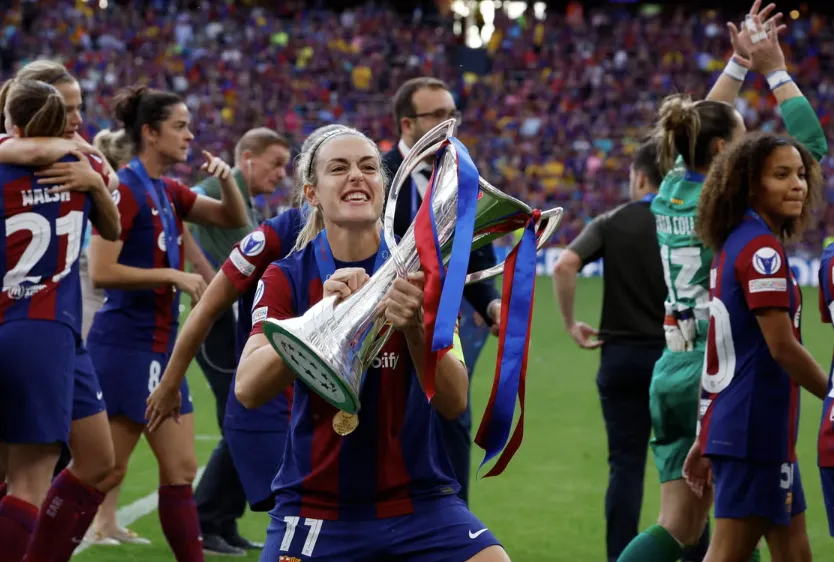
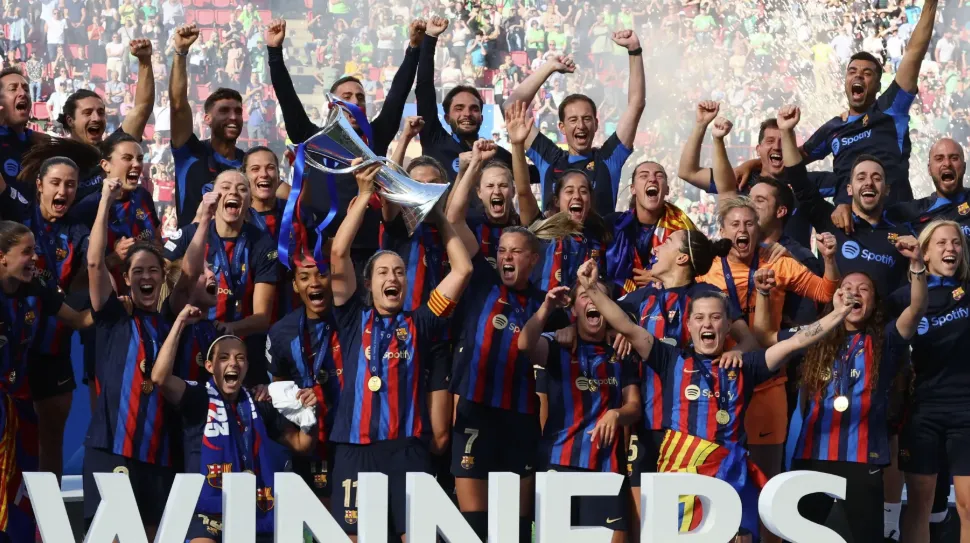
In recent years, the conversation has shifted significantly. While Lyon’s historical dominance is unquestionable, FC Barcelona Femení has emerged as the new standard-bearer of European women‘s football. The Catalan club has won three of the last four editions of the tournament, including a stunning 2023 final victory over Wolfsburg and their most recent triumph in 2024.
Barcelona’s success story is remarkable because it represents a cultural shift within a massive institution. Their playing philosophy, deeply rooted in the famous “La Masia” academy system, has been adapted perfectly for the women’s team. Watching Barcelona play is like watching a masterclass in possession football, with players like Aitana Bonmatí and Alexia Putellas dictating the tempo of games from midfield. The 2023/24 season was particularly special, as they retained their title by defeating Lyon in the final—a symbolic passing of the torch moment in women’s football.
Why Barcelona’s Dominance Feels Different
Unlike some previous champions who relied heavily on signing established international stars, Barcelona’s success has been built from within. The core of their team—Patri Guijarro, Mapi León, and the aforementioned Ballon d’Or winners—have come through the Spanish football system. This organic growth has made their dynasty feel sustainable and deeply connected to the club’s identity.
Following the Champions: The Other Title Holders
While Lyon and Barcelona may have the most titles, they are not the only clubs to have lifted the trophy. Several other historic clubs have left their mark on the competition. Clubs like 1. FFC Frankfurt (Germany) and Umeå IK (Sweden) were the pioneers of the tournament, winning multiple titles in the early 2000s. Their contributions laid the foundation for the professional era we see today.
Other notable champions include:
- Wolfsburg (Germany):Won back-to-back titles in 2013 and 2014.
- Turbine Potsdam (Germany):Triumphant in 2005 and 2010.
- Arsenal (England):The first non-German/Swedish club to win it in 2007.
Breaking Down the Current Season: Who Can Stop the Giants?
Looking at the current campaign, the question on every fan’s mind is whether anyone can dethrone Barcelona. The Catalan giants remain the team to beat, but the gap is closing. Traditional European heavyweights like Chelsea, under Emma Hayes’ successor, are building formidable squads. Lyon, after their defeat in the final, are hungrier than ever to reclaim their throne.
One key factor to watch is the increasing investment across the continent. Clubs in England, France, and Germany are spending more on facilities, coaching, and player recruitment. This means the era of one or two teams dominating might be coming to an end.
The Tactical Battle Ahead
From a tactical perspective, the competition has evolved. Teams are no longer just trying to match Barcelona’s possession game; they are now looking for ways to counter it. High-pressing defensive systems and quick transitions are becoming more common. Coaches are also paying closer attention to set-pieces and physical conditioning, recognizing that these small margins can decide big matches.
Expert Insight on the Modern Game
To provide deeper context, we spoke with Dr. Eleanor Vance, a football historian specializing in women’s sports development at the Institute of European Football.
“The current success of clubs like Barcelona is not an accident,” Dr. Vance explains. “It is the result of a long-term strategy where clubs invested in youth development and created a professional environment for female players. What we are seeing now—the tactical maturity and the world-class performances—is the culmination of work that began over a decade ago. The challenge for other clubs is not just to buy star players, but to replicate that institutional culture.”
This expert analysis highlights that while the trophy count is important, the real story is about the structural changes happening behind the scenes.
Key Factors Behind a Winning Campaign
What does it take to win the Women‘s Champions League in 2024? Based on the recent performances of the top teams, several elements are crucial:
- Squad Depth:With the tournament’s demanding schedule, teams cannot rely on just eleven starters. The ability to rotate quality players is essential.
- Tactical Flexibility:Teams that can adapt their style mid-game have a distinct advantage.
- Big-Game Experience:Knowing how to manage nerves in a final setting cannot be taught; it must be felt.
- Set-Piece Efficiency:In tight matches, corners and free-kicks often decide the outcome.
Conclusion: The Future of the Women’s Champions League
As we continue to watch the drama unfold, one thing is clear: the Women’s Champions League is entering a golden era. While Jeetwin celebrates the historic achievements of Lyon and the modern brilliance of Barcelona, the beauty of this competition lies in its unpredictability. New challengers are emerging, investment is skyrocketing, and the quality on display has never been higher.
Who will be the next club to carve their name into the history books? Will Barcelona extend their reign, or will a new team rise to challenge them? We’d love to hear your thoughts. Which team do you think has the best chance to win it all this season? Leave a comment below, share this article with your fellow football fans, and explore more of our in-depth analysis on the beautiful game. The pitch is ready, and the action is just beginning.
